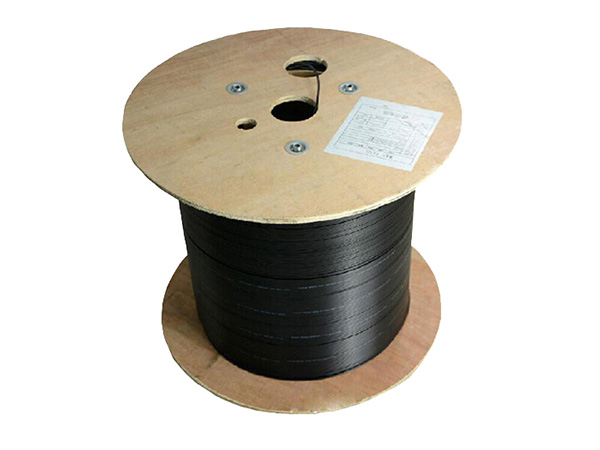
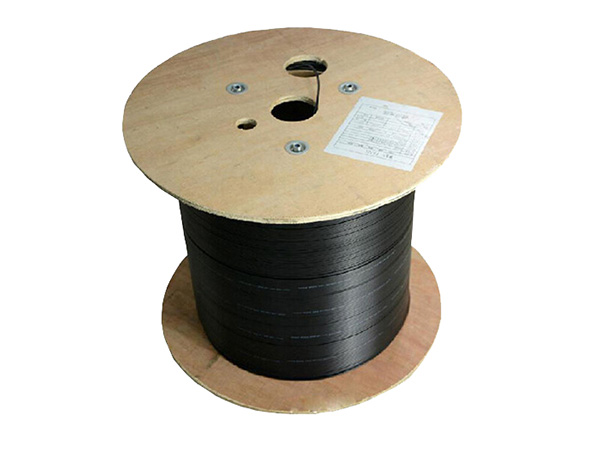
A dielectric waveguide that transmits light waves. Optical fiber is a kind of fiber composed of two layers of transparent media in concentric circles. The most widely used dielectric material is quartz glass (SiO2). The inner medium is called fiber core, and its refractive index is higher than the outer medium (called cladding). The refractive index of the fiber core or cladding is adjusted by doping germanium, phosphorus, fluorine, boron and other impurities in the quartz glass. The transmission wavelength of optical fiber for communication is mainly 0.8~1.7 microns of near-infrared light. The core diameter of optical fiber varies from several microns to 100 microns, and the outer diameter of most optical fibers is about 125 microns. It has a plastic coating on the outside. The optical cable is made of single or multiple optical fibers combined, strengthened and protected. Optical cables can be used in various environments. The manufacturing method of optical cable is similar to that of cable
Optical fiber and cable
Optical fiber communication is one of the important ways of modern information transmission. It has the advantages of large capacity, long relay distance, good confidentiality, immunity from electromagnetic interference and copper saving
The report uses the market data collected from the long-term tracking of the optical fiber and cable industry market, and constructs the analysis system from the overall height of the industry. The report mainly analyzes the development status and prospects of China's optical fiber and cable industry; The pattern and concentration of optical fiber and cable industry; Technical status of optical fiber and cable industry
Optical fiber transmission is based on the principle of total reflection of available light at the interface of two media. Catastrophic fiber, n1 is the refractive index of the core medium, n2 is the refractive index of the cladding medium, n1 is greater than n2, and the incident angle of the light entering the core when reaching the core-cladding interface (referred to as core-cladding interface) is greater than the critical angle of total reflection θ C, total reflection can occur without light energy passing through the fiber core, and the incident light can be transmitted forward through countless times of total reflection at the interface. Originally
When the optical fiber is bent, the interface normal turns and the incidence angle is small, so the incidence angle of some rays becomes less than θ C but not total reflection. However, those rays with larger incident angles can still be fully reflected, so the optical fiber can still transmit when bent, but it will cause energy loss. Generally, when the bending radius is greater than 50~100 mm, the loss can be ignored. Small bending will cause serious "micro bending loss"
People often use electromagnetic wave theory to further study the mechanism of optical fiber transmission, and solve the wave equation by the boundary conditions of optical fiber dielectric waveguide. The light propagating in the optical fiber contains many modes. Each mode represents a kind of electromagnetic field distribution and corresponds to a certain light described in geometric optics. The conduction mode existing in the optical fiber depends on the normalized frequency of the optical fiber ν Value
Where NA is the numerical aperture, which is related to the refractive index of the core and cladding medium. ɑ Is the core radius, λ Is the wavelength of the transmitted light. When the optical fiber is bent, mode coupling occurs, and part of the energy is transferred from the conduction mode to the radiation mode, which is transferred to the fiber core for external loss and consumption
Performance: The main parameters of optical fiber include attenuation, bandwidth, etc