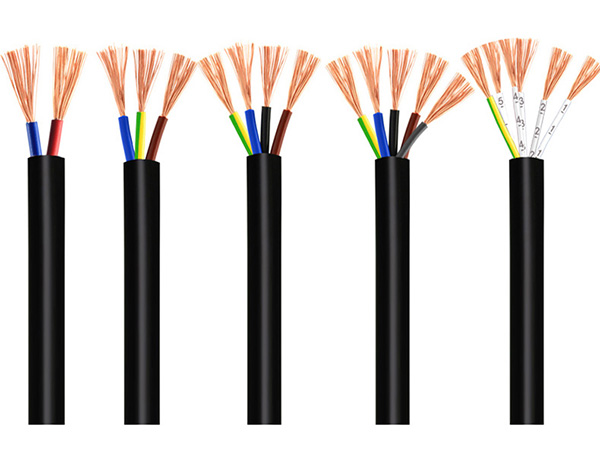
RVV cable and BVR cable are multi-core cables with excellent flexibility. What kind of wire is RVV? What is the difference between RVV wire and BVR wire? Next, I will introduce their differences
1、 What wire is RVV
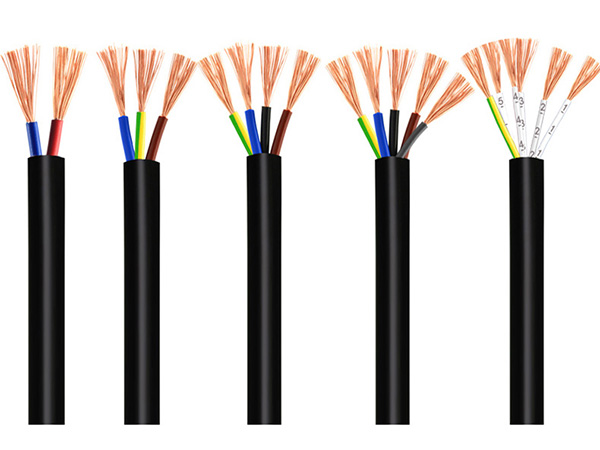
RVV wire is fully called copper-core PVC insulated flexible wire, commonly known as sheath wire, electronic wire, signal wire, multi-core wire, etc. It is suitable for mobile laying soft occasions with AC rated voltage of 300/500V and below, and for power lines, control lines and signal transmission lines for electrical appliances, instruments and electronic equipment and automation devices, and for anti-theft alarm systems, building intercom systems, etc
RVV flexible wire
2、 Main parameters of RVV line
(1) Rated voltage: 300/500V
(2) Nominal cross-section: 2-core, 3-core, 4-core, 5-core, 6-core, 7-core, 8-core, 10-core, 12-core, 16-core, 20-core, 24-core, 30-core, etc
(3) Insulation thickness: 0.8mm
(4) Executive standard: GB5023.3-1997
(5) Conductor material: oxygen-free copper
(6) Insulation material: environment-friendly polyvinyl chloride (PVC)
(7) Standard length: 100 meters
(8) Main colors: red, yellow, green, blue, black, two-color (yellow and green)
(9) Scope of application: power wiring of electrical and instrument equipment
(10) Applicable environment: anti-theft alarm system, building intercom system, etc
3、 What is the difference between RVV line and BVR line
(1) Executive standard of RVV line: GB5025.3-1997
Executive standard of BVR line: GB5023.3-1997
(2) The sectional area of RVV line is larger than that of BVR line due to different sectional areas
(3) Different in structure, BVR is a single-core wire composed of multiple copper wires; RVV is also composed of several copper wires, but it can be multi-core wire