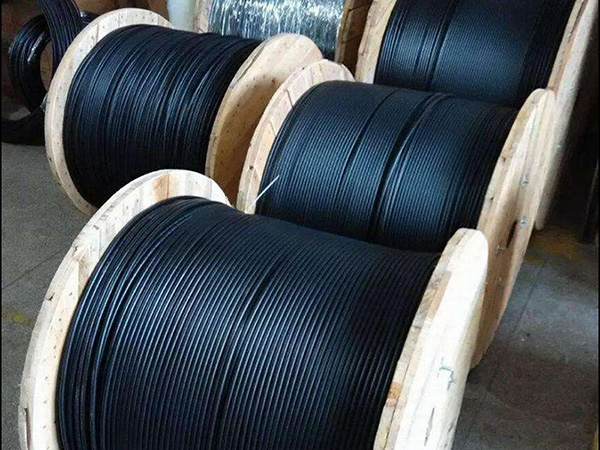
1. After receiving the optical cable, the user shall check the optical cable certificate and the attached optical cable data, check the cable reel number, model, number of cores and length, and check whether the outer package is damaged or not
2. When the optical cable is laid, a section of traction rope must be connected with the optical cable reinforcement, and fixed with the sheath with a mesh sleeve or tape. In case of pipeline optical cable, a special rotating traction head must be added between the traction rope and the optical cable reinforcement. It is not allowed to pull the outer sheath of the optical cable directly
3. For the deployment of optical cables with a length of more than 2KM, it is not allowed to put them all at once from the beginning to the end. The optical cables must be coiled in the middle of the section and placed in an inverted 8 shape at both ends
4. When unloading the optical cable from the vehicle, it is better to use a forklift or crane hoist to gently place the optical cable from the vehicle on the ground
5. In the field construction, when unloading the optical cable from the vehicle, it is advisable to use a flat and straight plate between the vehicle platform and the ground to form a slope of 45 degrees. Use a rope to pass through the middle hole of the optical cable. People pull both ends of the rope on the vehicle, and the optical cable slides down along the board slope. When unloading the optical cable, it shall be strictly stacked and laid flat. It is strictly prohibited to drop the optical cable vertically from a high place, and place the optical cable with strong impact to cause damage
6. When the optical cable needs to be rolled, it shall be rolled in the direction of the rotation arrow marked on the cable reel, but it shall not be rolled for a long distance
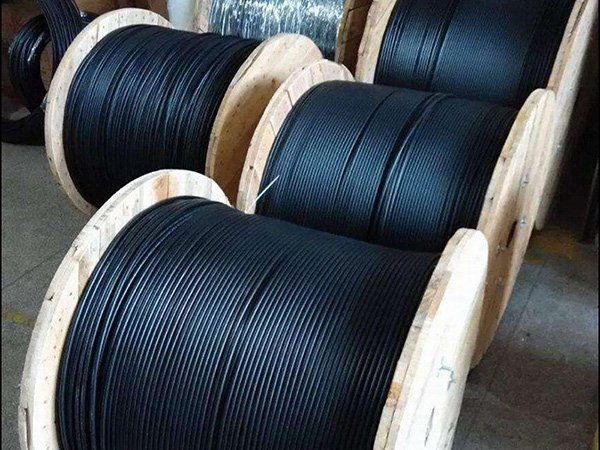
7. Before construction, the optical cable needs to be tested on a single disc, such as the quality of outer sheath and attenuation index
8. The maximum pulling force of pipeline or overhead optical cable laying shall not exceed 1500N, and the maximum pulling force of direct-buried optical cable laying shall not exceed 3000N
9. The optical cable shall not be bent or formed into a 90-degree right-angle bend during the construction and laying positioning; For dynamic bending (such as construction), the bending radius of pipeline and overhead optical cable shall be greater than 20 times the outer diameter of optical cable; For direct-buried optical cables, the bending radius shall be greater than 25 times the outer diameter of the optical cable; When laying and positioning, the bending radius of pipeline and overhead optical cable shall be greater than 10 times the radius of optical cable; For direct-buried optical cables, the bending radius shall be greater than 12.5 times the outer diameter of the optical cable. Do not "buckle" the cable due to serious bending
10. The tensile force of optical cable during construction shall not exceed the provisions of allowable temporary force it can bear (pipeline and overhead optical cable: 1500N; direct-buried optical cable: 3000N; ADSS optical cable: 20% RTS), and the operation and use shall not exceed the provisions of allowable long-term force (pipeline and overhead optical cable: 600N; direct-buried optical cable: 1000N; ADSS optical cable: MAT). Optical cable construction shall be carried out under the guidance of qualified technical personnel
It is very important for optical cables to be routed in the correct way. Improper construction will easily lead to increased attenuation, shortened service life, broken fiber, broken skin, and broken armor. The optical cable, especially the feeder optical cable, is large in diameter and heavy in weight. When setting out, the optical cable reel must be put up with a bracket, and the cable reel must be rolled while pulling. If the loose cable is not equipped with an optical cable reel, it must be straightened out before wiring. The cable pulling personnel and the line defense personnel should be equipped with walkie-talkies to keep in touch. When it cannot be pulled, do not use brute force to pull it. It must be straightened out slowly before continuing, In this way, we can ensure that our "fragile" optical cables are safely laid